
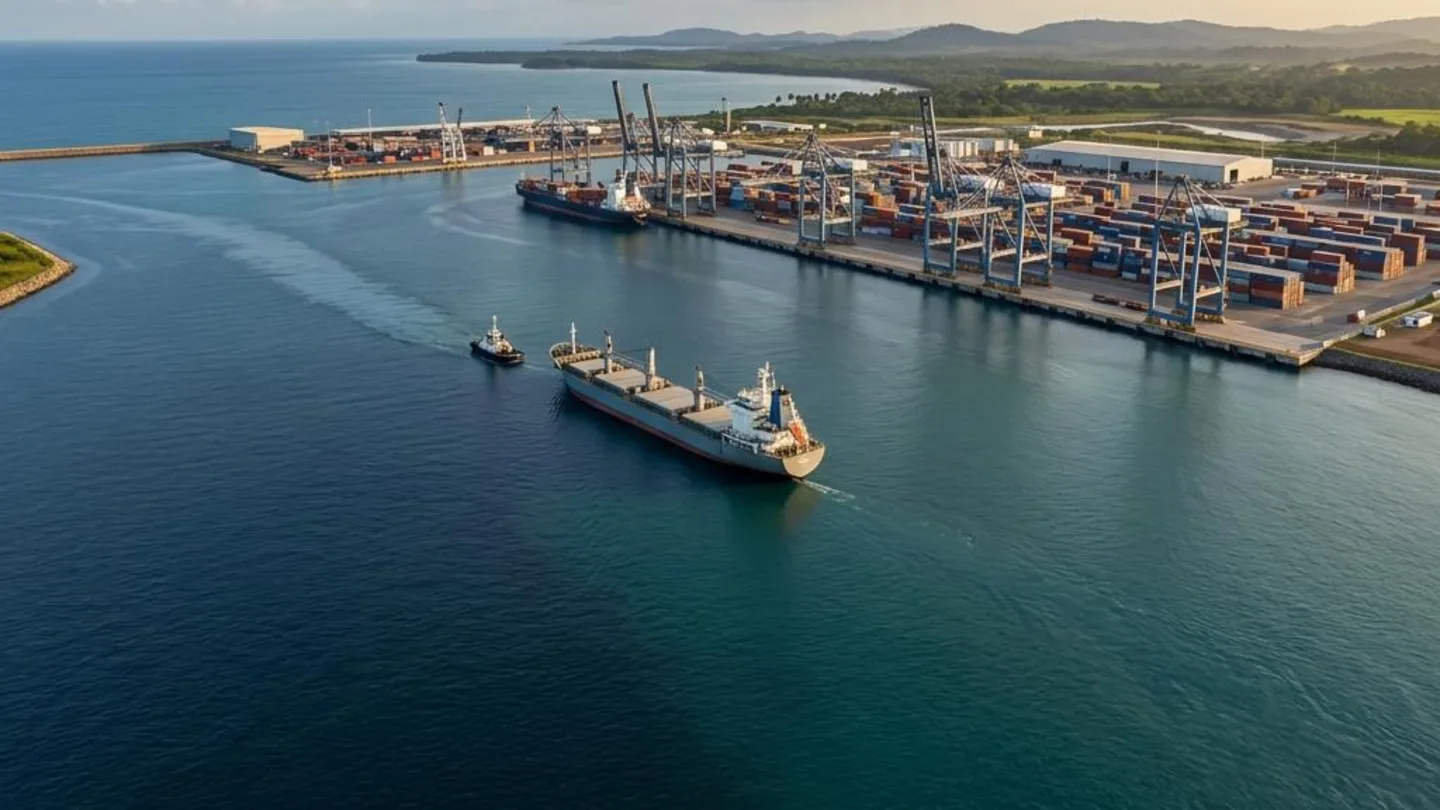
Marine compliance for a port facility means meeting the international conventions, codes and national rules that govern how ships are received, secured, served and protected from pollution at the berth. For most port facilities in Central and West Africa, the challenge is not a lack of rules. It is keeping track of many overlapping requirements and proving, on any given day, that they are met. Maximum Services Sarl carries out marine compliance audits, builds legal registers and helps port facilities close the gaps before an inspector, a customer audit or an incident exposes them.
The main compliance areas for a port facility
| Area | Key instruments | What a port facility must show |
|---|---|---|
| Maritime security | SOLAS Chapter XI-2 and the ISPS Code | An approved Port Facility Security Assessment (PFSA) and Port Facility Security Plan (PFSP), a trained PFSO, drills and records |
| Pollution prevention | MARPOL Annexes I, II, IV, V and VI | Adequate port reception facilities for ship-generated waste, oil transfer controls, records |
| Dangerous goods | IMDG Code; IMO recommendations on dangerous cargoes in port areas | Notification, segregation, handling procedures and emergency arrangements for dangerous cargo |
| Navigation safety | SOLAS Chapter V; IALA standards | Aids to navigation suited to traffic and risk, pilotage and VTS procedures |
| Occupational safety in port work | ILO Convention 152; ILO code of practice on safety and health in ports | Safe systems of work for cargo handling, lifting equipment inspections, training |
| Regional and national law | CEMAC Community Merchant Shipping Code; national port and labour regulations | Licences, permits, reporting and inspections required at national level |
Ships calling at Cameroonian and other Gulf of Guinea ports are also subject to port state control under the Abuja MoU. Deficiencies found on ships often trace back to services the port did not provide, such as waste reception or accurate pre-arrival information.
ISPS: the requirement inspectors check first
Under Section 16 of Part A of the ISPS Code, every port facility that serves ships on international voyages must have a security plan based on its security assessment and approved by the contracting government. Common ISPS weaknesses that a compliance audit looks for include:
- a PFSA that has not been reviewed since the facility layout changed;
- access control that works at the main gate but not on the waterside;
- drills and exercises carried out but not recorded;
- a PFSO without a deputy or with unclear authority.
These gaps are easy to close once they are seen. The audit is what makes them visible.
Our marine compliance audit
- Legal and other requirements register. We list every convention, code, national text and client requirement that applies to the facility, with the clause, the responsible department and the evidence expected.
- Document review. Plans, procedures, certificates, permits, training records and inspection reports.
- Site inspection. Berths, gates, waterside, waste reception, dangerous-goods areas, fire and spill equipment.
- Interviews. Harbour master's office, PFSO, terminal operations, HSE and maintenance.
- Gap report. Each finding is rated by severity and linked to the requirement it breaches.
- Corrective action plan. Actions, owners, deadlines and a follow-up visit to verify closure.
We can align the register with ISO 45001 clause 6.1.3 and ISO 9001 so that compliance becomes part of the port's management system, not a separate file.
Why compliance pays
A port that can show compliance wins in four ways. Shipping lines and oil majors are more willing to call, because their vetting teams find fewer concerns. Insurers and lenders see a lower risk profile. Detentions and disputes linked to port services drop. And when an incident happens, the authority can show it took reasonable steps.
Frequently asked questions
What is a Port Facility Security Plan (PFSP)?
A PFSP is the document required by the ISPS Code that sets out the security measures a port facility applies at each security level. It must be based on the Port Facility Security Assessment, be approved by the contracting government, and be kept under review by the Port Facility Security Officer.
How often should a port facility carry out a compliance audit?
We recommend a full marine compliance audit at least once a year, and after any major change: a new terminal, a new type of cargo or a change in the law. Specific instruments set their own frequencies, for example for ISPS drills and exercises.
Does MARPOL apply to ports or only to ships?
MARPOL mainly regulates ships, but it also requires governments to ensure adequate reception facilities in ports for oily waste, sewage, garbage and other ship-generated waste. Port authorities and terminals usually provide or contract those facilities, so they share responsibility for compliance.
What is a legal register?
A legal register lists every legal and other requirement that applies to an organisation, with how it applies and how compliance is checked. It is required in practice by ISO 45001 and ISO 14001, and it is the backbone of any marine compliance programme.
Book a compliance audit
Maximum Services Sarl audits port facilities in English and French across Central and West Africa.