
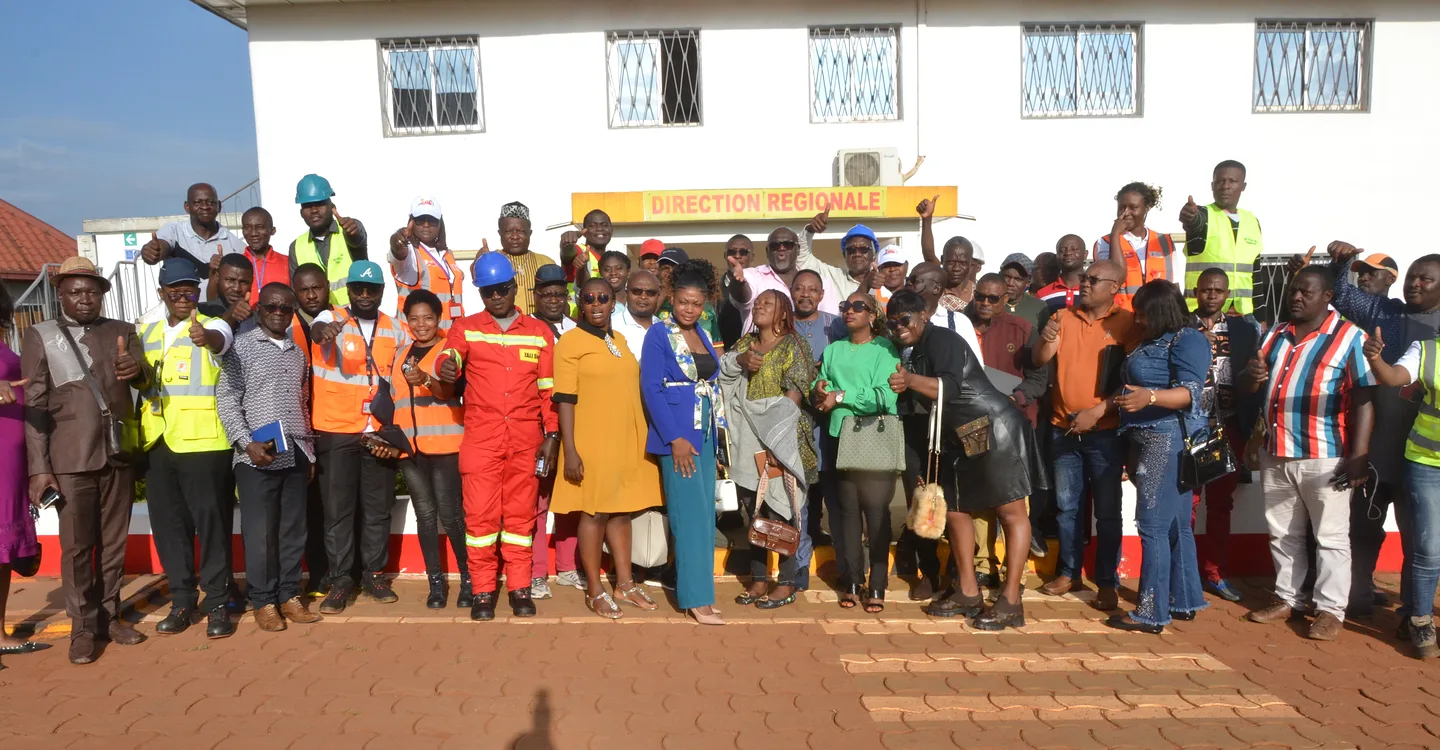
A corporate road safety campaign is the fastest, most cost-effective way for a company with a large vehicle fleet to protect its drivers, its cargo and its reputation, especially in December, when traffic, fatigue and alcohol all peak at once. At Maximum Services Sarl, we design and run these campaigns from start to finish: risk diagnosis, campaign materials, quizzes, branded gadgets, driver sensitization, defensive driving training and on-site alcohol testing. When the full programme is applied and sustained, our target is clear: cut road accidents by up to 80% and bring road fatalities to zero.
Why road safety is a business risk, not just a public problem
Road crashes are not rare events. The WHO's Global Status Report on Road Safety 2023 counts about 1.19 million road deaths every year worldwide – more than two every minute – and road injuries remain the leading killer of people aged 5–29.
Cameroon carries a heavy share of that burden:
- About 16,000 road crashes a year, with more than 1,000 deaths in national statistics – while WHO estimates put the real toll closer to 6,000 deaths a year (ITF/OECD Safe System case study).
- Economic losses estimated by UNECE at nearly 100 billion FCFA a year – around 1% of GDP.
- On the Douala–Yaoundé highway, the fatality rate per kilometre driven has been estimated at 35 times higher than on comparable roads in Europe or the United States (PMC, 2024).
- Government data cited by the Nkafu Policy Institute attribute about 70% of crashes to human factors – inattention, speeding and poor driving skills.
That last figure is the key for employers. If most crashes come from driver behaviour, then most crashes can be prevented by changing behaviour – which is exactly what a well-run fleet safety campaign does.
For a company, every crash means more than a repair bill: injured or lost employees, damaged goods, missed deliveries, insurance claims, legal exposure, and lasting damage to the brand painted on the side of the truck.
The festive season: when fleet risk peaks
In Cameroon, the end-of-year period is widely recognised as one of the deadliest on the roads. Every December, the Ministry of Transport launches a national prevention campaign because mobility of people and goods surges. The pattern repeats every year:
- On 11 and 12 December 2025, two crashes left a provisional toll of 18 dead and 16 injured (AllAfrica).
- The same month, a bus–tanker collision at Likomba, Tiko killed eight people (AllAfrica).
- Just days before Christmas 2025, seven people died in a single crash at Logbessou, Douala.
For fleet operators, December combines every major risk factor at once:
- Higher volumes – year-end deliveries, stock building and client deadlines
- Fatigue – longer shifts, night driving and pressure to finish routes
- Alcohol – end-of-year parties, celebrations and social pressure
- Congestion – crowded urban roads in Douala and Yaoundé and heavy traffic on the N3, N4 and N5 corridors
- Mixed traffic – more pedestrians, moto-taxis and inexperienced drivers on the road
What our corporate road safety campaign includes
We build the project from start to finish, so your HSE and fleet teams don't have to manage a dozen suppliers.
1. Diagnosis and campaign design
We start with your data: accident and incident history, routes, vehicle types, driver profiles, working hours and high-risk periods. From this we set measurable objectives (for example, zero alcohol-related incidents, a 50% drop in minor crashes) and a campaign calendar.
2. Campaign materials and branding
We conceive and produce tailored, bilingual (English/French) materials: posters, banners, flyers, cab stickers, toolbox-talk sheets, short videos and WhatsApp-ready visuals. Messages focus on your real risks – speed, seat belts, phone use, fatigue, drink-driving and pedestrian safety.
3. Road safety quizzes and engagement
Interactive road safety quizzes turn sensitization into competition. Drivers, supervisors and office staff test their knowledge of the highway code, defensive driving and emergency response, with prizes for the best teams. Engagement is what makes messages stick.
4. Road safety gadgets
Branded, useful gadgets keep the message in the cab long after the campaign ends: reflective vests, key rings, seat-belt reminders, phone holders, first-aid kits, water bottles and caps.
5. Sensitization sessions
On-site sessions at depots, warehouses and terminals, timed around shift changes so no driver is missed. We address drivers, their supervisors and – just as important – the managers who set delivery deadlines.
6. Defensive driving training
Our defensive driving training teaches drivers to anticipate hazards, keep safe following distances, manage speed, handle night and rainy-season driving, and respond to other road users' mistakes. Sessions combine classroom theory and practical, in-vehicle coaching.
7. Alcohol testing during the festive period
We organise breathalyser-based alcohol testing at depots and departure points during the high-risk weeks, run confidentially and in line with your internal policy. Testing is a strong deterrent: when drivers know they will be checked, they plan ahead.
8. Follow-up and reporting
After the campaign, you receive a report with participation figures, quiz results, test outcomes and recommendations, plus indicators to track in the following months.
Can a road safety campaign really cut accidents by up to 80%?
Yes – when it is more than a one-day event. International fleet studies show what a sustained, combined programme can achieve:
- A Virginia Tech Transportation Institute study of commercial fleets recorded a 75.6% reduction in preventable crashes at a carrier that combined comprehensive ongoing driver training with collision-avoidance technology (VTTI/NSTSCE report).
- A 200-vehicle corporate fleet cut preventable claims by 65% and claim costs by 55% in two years after strengthening its driver safety programme (Holman).
The lesson is consistent: results come from combining training, supervision, clear rules (including alcohol), and a visible safety culture led by management. Our campaigns are built on that principle, which is why our target of up to 80% fewer accidents and zero fatalities is realistic for companies that commit to the full programme.
Which companies benefit most?
- Logistics and transport companies operating trucks on the Douala–Yaoundé, Douala–Bafoussam and Kribi corridors
- Port, terminal and shipping operators with tractors, forklifts and shuttle vehicles
- Oil, gas and fuel distributors moving tankers and dangerous goods
- Beverage, FMCG and distribution companies with large sales and delivery fleets
- Banks, telecoms and NGOs with staff cars and pool vehicles
- Construction and mining companies with heavy plant and site vehicles
Aligning with international standards
A corporate road safety campaign is a natural step towards ISO 39001 (road traffic safety management systems) and supports your ISO 45001 occupational health and safety obligations, since driving for work is a workplace hazard. Our team brings NEBOSH-level HSE expertise, so the campaign fits into your existing risk assessment and management system rather than sitting beside it.
Quick checklist: is your fleet ready for December?
- Accident and near-miss data reviewed for the past 12 months
- Drink-driving and drug policy communicated to every driver
- Alcohol testing scheduled for the festive weeks
- Defensive driving refresher completed by high-mileage drivers
- Journey plans and rest breaks set for long routes
- Pre-trip vehicle checks (tyres, brakes, lights) enforced
- Phone-use-while-driving rule in place
- Emergency contacts and first-aid kits in every vehicle
If you ticked fewer than six boxes, your fleet is exposed this festive season.
Frequently asked questions
What is a corporate road safety campaign?
It is a structured programme a company runs to reduce road risk among its drivers and staff. It typically combines risk analysis, awareness materials, quizzes, gadgets, sensitization sessions, defensive driving training and alcohol testing, with clear objectives and follow-up reporting to measure results.
When should a company run a road safety campaign?
At least once a year, ideally from late November so it covers the festive season, when traffic, fatigue and alcohol consumption peak. Companies with high-risk fleets benefit from shorter refresher campaigns at the start of the rainy season and before major holidays.
What is defensive driving training?
Defensive driving training teaches drivers to anticipate hazards and avoid collisions, even when other road users make mistakes. It covers safe following distances, speed management, hazard perception, night and wet-weather driving, and fatigue management, through classroom and in-vehicle coaching.
Is alcohol testing of drivers legal in the workplace?
Companies can test drivers when testing is set out in a clear internal policy, communicated in advance and applied fairly and confidentially. We help you frame the policy and run testing respectfully. Check specific requirements with your legal or HR adviser.
How long does it take to organise a campaign?
A complete campaign can usually be prepared in two to four weeks, depending on fleet size, the number of sites and the materials required. For the festive season, we recommend contacting us by early November.
Do you run campaigns outside Douala?
Yes. We run campaigns at client sites across Cameroon, including Douala, Yaoundé, Kribi and Limbé, and can support operations elsewhere in the CEMAC region on request.
Protect your drivers this festive season
Every fleet crash is preventable. Let Maximum Services Sarl build your corporate road safety campaign – from diagnosis and materials to defensive driving training and alcohol testing – so your people get home safely this December.
Request a quoteSources: WHO Global Status Report on Road Safety 2023; ITF/OECD Safe System case study – Cameroon; PMC (2024); Nkafu Policy Institute; Virginia Tech Transportation Institute (NSTSCE); Holman; AllAfrica (December 2025).